
Walk into a festival field after dark and the soundtrack usually includes a low, constant hum from a row of diesel generators. For decades that was simply the cost of staging an event on a site with no mains electricity. Today, the festival power supply model is changing fast, and the reasons go beyond emissions: noise, fuel logistics, and audience expectations are all pushing organizers toward quieter, cleaner alternatives.
The scale of the diesel habit
Temporary events are some of the most diesel-dependent power users around. Industry estimates suggest the UK festival sector alone burns more than 12 million litres of diesel every year. Much of that fuel is wasted. Generators are usually sized for the highest possible peak load, so for most of the event they run far below capacity, where engines are least efficient.
That is why experienced organizers now start with a power audit before choosing any equipment. Mapping every load by wattage and timing, from stages and sound systems to food vendors and campsites, often reveals oversized generators and idle capacity. One European festival that divided its site into power zones found exactly that, and used the data to cut waste before changing a single piece of hardware.
What a diesel-free event looks like in practice
The most convincing proof comes from events that have already done it. A 2024 festival in Bristol with more than 32,000 attendees ran without diesel generators at all. Its main stage was powered by a mobile battery system, and batteries were charged off site from a renewable supply and moved around the venue with electric vehicles. Independent post-event research found that on-site electricity emissions were at least 81% lower than they would have been with diesel generators.
The idea is now scaling up. The city has launched a low-carbon programme aiming to decarbonise more than 20 major events across 2026 using a similar logistical template.
Other organizers have taken a different route. One major UK festival ran all of its generators on HVO, a fuel made from waste cooking oil, in 2023, which cut net CO2 emissions by up to 90% compared with regular diesel. HVO is a useful bridge, but it still relies on combustion engines, which means exhaust, noise, and regular fuel deliveries remain part of the picture.
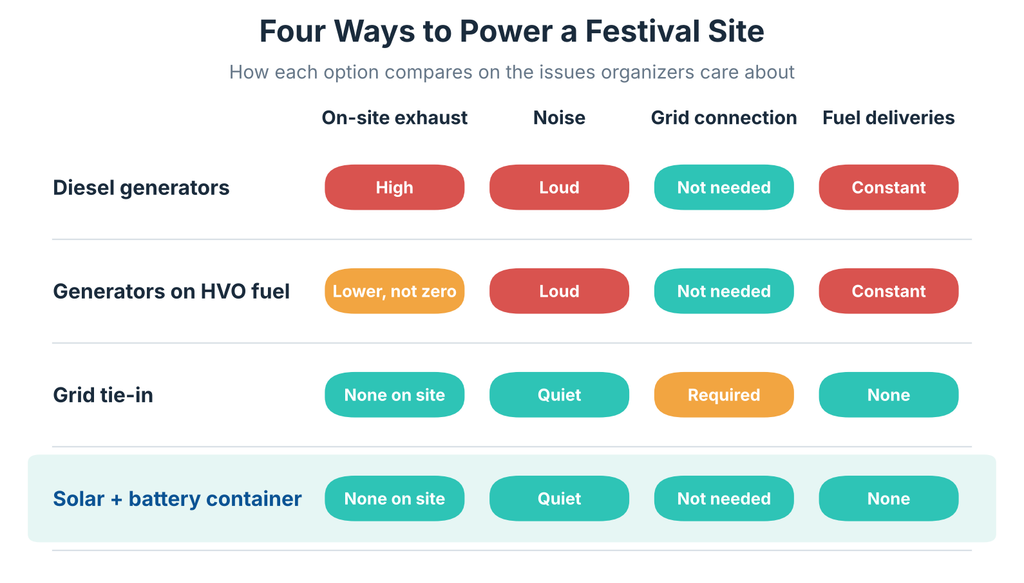
Solar and storage for festival power supply on greenfield sites
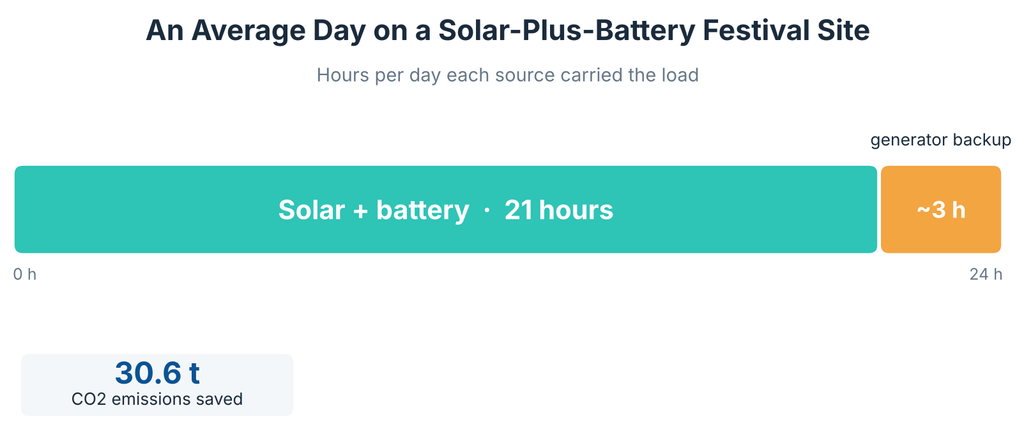
Many festivals take place on open land with little or no grid access, which is where solar-plus-battery systems make the most sense. At part of one Australian festival’s operations, solar-charged batteries carried the load for an average of 21 hours per day, so the diesel generators only had to run for a few hours. That change alone saved 30.6 tonnes of emissions. In the Netherlands, a theatre festival that used two on-site batteries saved an estimated 20,000 litres of diesel in a single season.
The audience notices the difference too. A California festival that replaced diesel light towers with solar-charged battery towers saw noise complaints disappear, and sound engineers have reported cleaner, more responsive power for stage equipment on battery supply.
Why containerized solar storage fits event work
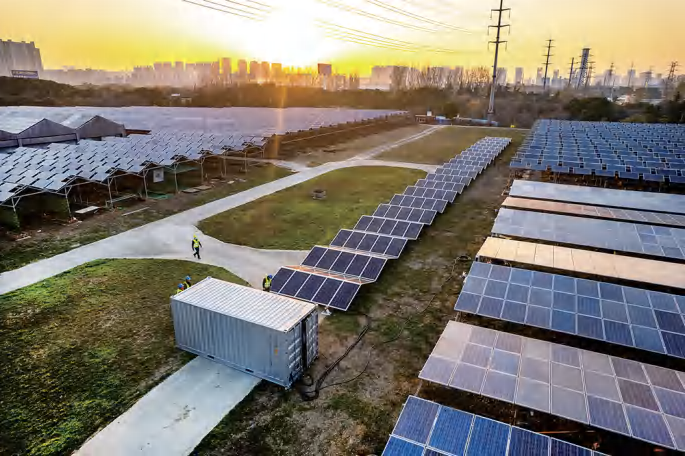
Events have a very specific power profile: high demand for a few days, a short build window, and then a move to the next site. That profile suits containerized solar-plus-storage systems for several reasons:
- Speed of deployment. A pre-integrated unit arrives ready to connect, which matters when build time is measured in days.
- Peak handling. Batteries absorb short demand spikes, so organizers no longer need oversized generators running at low load all weekend.
- Quiet operation. With no engine on site, power units can sit close to stages, camps, and neighbours without noise complaints.
- Reusability across a season. The same unit can serve a summer of events in different locations, and a foldable design that ships flat and opens on site keeps transport costs down between venues.
Looking ahead
Festival power supply is following the same path as construction sites and remote industrial work: diesel is still common, but the direction of travel is clear. City programmes, sector frameworks, and audience expectations are all pointing the same way, and organizers who plan their power around storage, solar, and smart load management are already reporting cleaner, quieter, and more efficient events. For equipment suppliers and rental fleets serving the European events market, containerized solar storage is becoming a practical answer to a very visible problem.
 English
 Croatian
 Czech
 Danish
 Dutch
 Estonian
 Finnish
 French
 German
 Greek
 Hungarian
 Irish
 Italian
 Japanese
 Korean
 Lithuanian
 Luxembourgish
 Norwegian
 Polish
 Portuguese
 Romanian
 Slovak
 Slovenian
 Spanish
 Swedish