
Diesel generators have powered European construction sites for decades, running everything from site lighting and tools to portable offices and EV charging points. That default is now under sustained regulatory pressure, and the direction of travel points toward one clear winner: self-contained power systems that produce zero tailpipe emissions on site, with solar-plus-storage containers among the most practical options available today.
A regulatory tightening that has been building for almost 30 years
The EU has regulated emissions from non-road mobile machinery, the category that covers generators, excavators, compressors, and similar equipment, since 1997. Each successive stage of the rules has been stricter than the last, and the current Stage V standard, in force since 2019, is the toughest yet. Cumulatively, these rules have cut particulate matter and nitrogen oxide emissions from covered engines by more than 95% since regulation began.
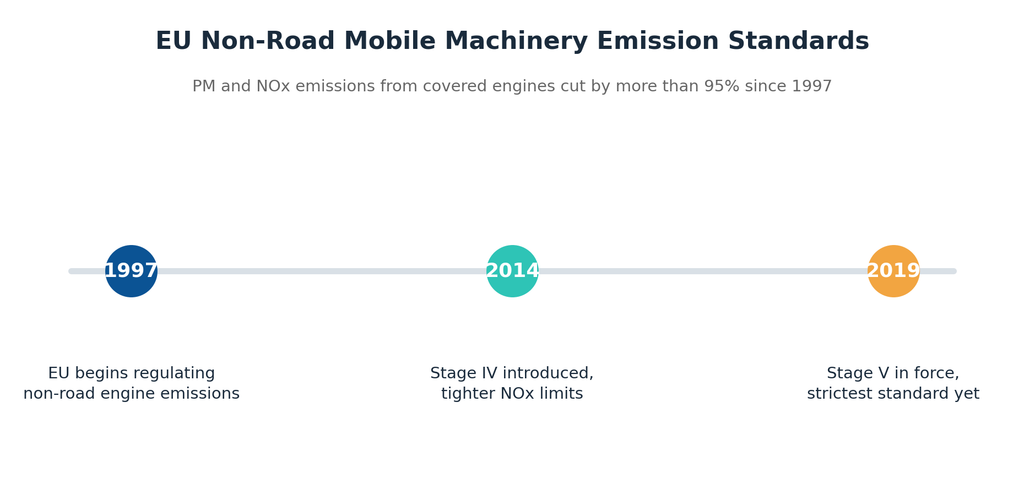
This is not a static rulebook, either. Industry monitoring bodies have flagged that the European Commission is expected to report on a review of the Stage V regulation, based on years of in-service emissions monitoring data, suggesting further tightening is a live possibility rather than a distant hypothetical.
Cities are moving faster than the baseline
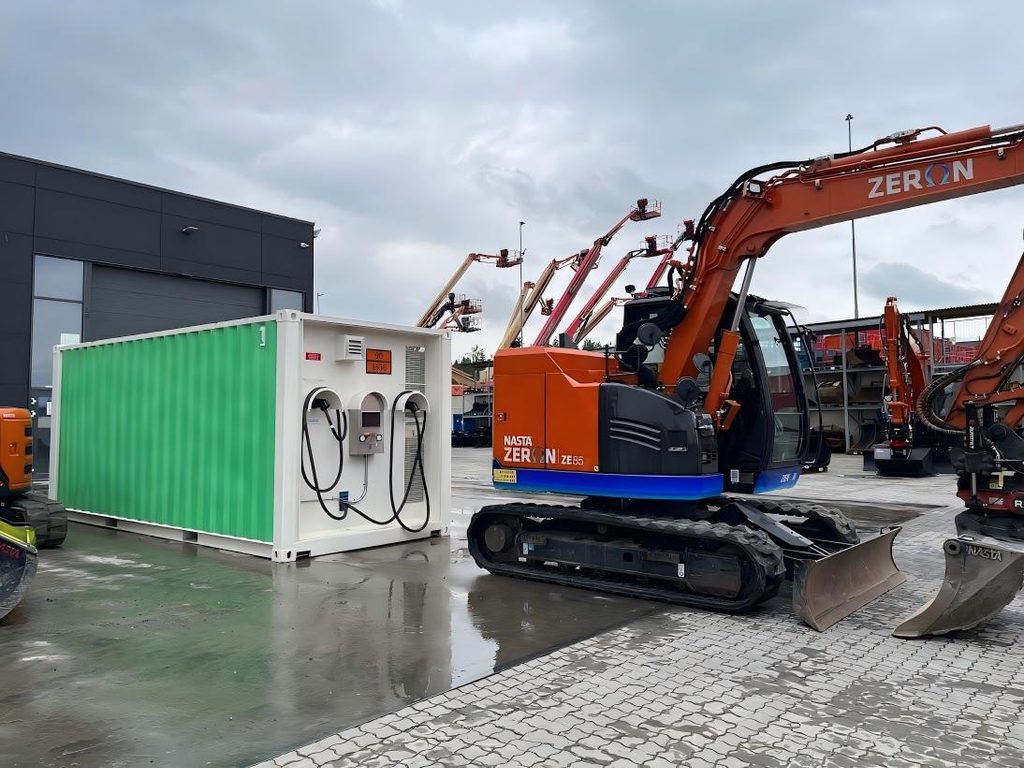
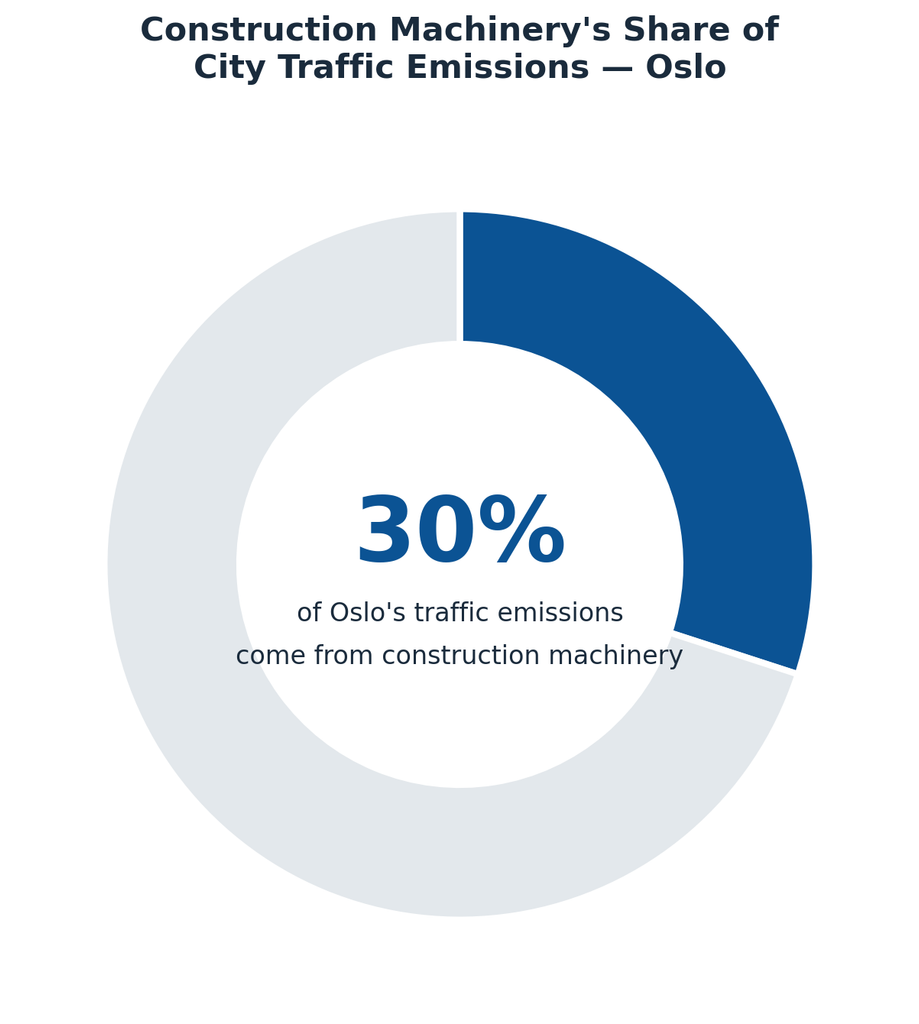
While EU-wide rules set the floor, individual cities are setting a much higher bar. Oslo became home to the world’s first fully emission-free construction site in 2019 and has committed to eliminating fossil fuel use from municipal construction entirely by 2030, as part of a broader target to cut the city’s climate gas emissions by 95%. The scale of the opportunity is significant: construction machinery is estimated to account for roughly 30% of Oslo’s traffic-related emissions, a share large enough that tackling it has become a headline climate strategy, not a side initiative.
Stockholm and Copenhagen have followed similar paths, each folding zero-emission construction targets into their city climate strategies. The pattern across all three is the same: municipal procurement rules increasingly specify fossil-free equipment for public construction projects, which puts direct commercial pressure on contractors bidding for that work.
Why this shifts demand toward solar-plus-storage containers
For a contractor facing a zero-emission tender requirement, the practical question is simple: what replaces the diesel genset without requiring a new grid connection or months of site engineering? A pre-integrated solar-plus-storage container answers that directly, since it ships as one factory-tested unit, produces no tailpipe emissions at all, and can power site lighting, tools, and offices the same way a generator would.
Two design factors matter more as this shift plays out:
- Regulatory durability. A solar-plus-storage system is not exposed to the next round of engine emission limits at all, since it has no combustion engine to regulate. That removes a compliance variable that diesel and even newer low-emission generator sets still carry.
- Transport efficiency. As more of these systems move across borders to reach job sites, the shipping footprint of the unit itself becomes a real cost line. A foldable container design that ships flat and unfolds into full size on site reduces the number of loads needed to mobilize a project, compared with a rigid container shell of the same finished capacity.
Looking ahead
The direction is consistent across every level of policy in this space: EU-wide standards have tightened for almost three decades with a further review pending, and leading cities are moving well ahead of that federal floor with hard 2030 targets. For equipment buyers and rental fleets serving the European construction market, the practical takeaway is that zero-emission site power is shifting from a compliance edge case to a standard tender requirement, and solar-plus-storage containers are one of the few technologies positioned to meet that requirement outright.
 English
 Croatian
 Czech
Czech Danish
 Dutch
Dutch Estonian
 Finnish
 French
 German
 Greek
Greek Hungarian
 Irish
Irish Italian
 Japanese
 Korean
 Lithuanian
 Luxembourgish
 Norwegian
 Polish
 Portuguese
 Romanian
 Slovak
 Slovenian
 Spanish
 Swedish