
The EU Battery Regulation Is Phasing In Fast, and It Applies to More Than Just EVs
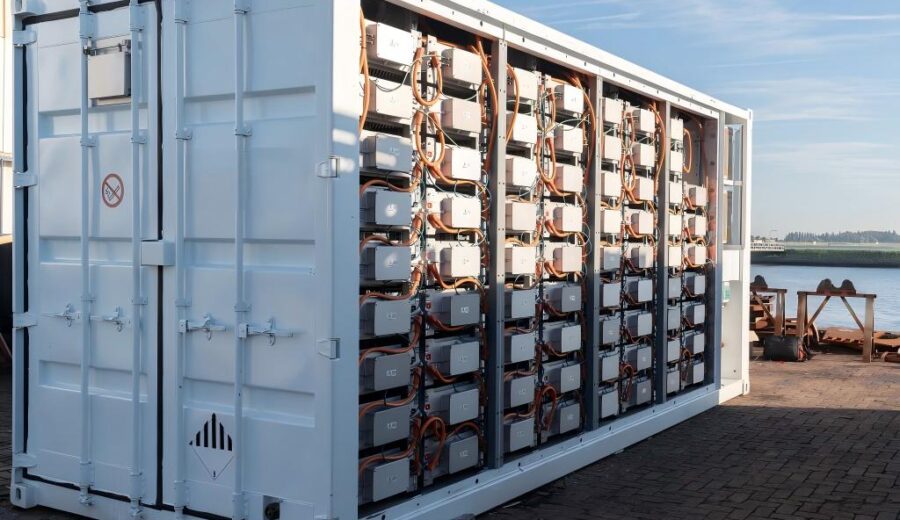
Most coverage of the EU Battery Regulation focuses on electric vehicles, and understandably so, since EV batteries were the first category subject to its rules. But the regulation covers nearly every rechargeable battery category placed on the EU market, including the large lithium battery banks integrated into containerized and foldable solar-plus-storage systems. For manufacturers and buyers in that space, the compliance clock is already running.
A single framework replacing a patchwork of national rules
Regulation (EU) 2023/1542 came into force in August 2023 and became generally applicable across the EU in February 2024, replacing the older Battery Directive. Its goal is straightforward: push batteries sold in the EU toward a lower carbon footprint, more responsibly sourced raw materials, and a higher rate of collection and recycling at end of life. Unlike the directive it replaced, it applies directly and uniformly across all member states, with CE marking against the new requirements already mandatory.
The rules do not land all at once. They are phased in across categories and years, and the schedule has already shifted once since the regulation was published.
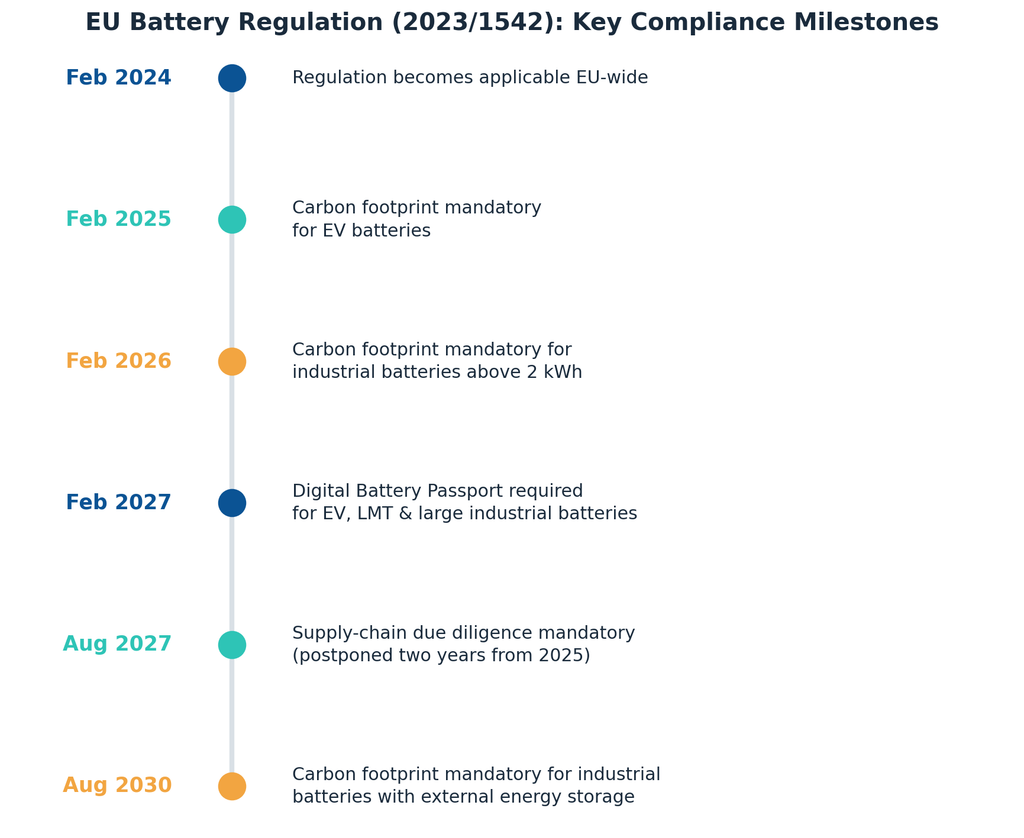
Carbon footprint declaration requirements arrived first for EV batteries in February 2025, and extended to rechargeable industrial batteries above 2 kWh, a category that covers most containerized energy storage packs, in February 2026. The Digital Battery Passport, a QR-coded record of a battery’s materials, origin, and performance data, becomes mandatory in February 2027 for EV, light-transport, and large industrial batteries. Industrial batteries used specifically with external energy storage systems, which describes many solar-plus-storage container products, face their own carbon footprint deadline in August 2030.
The rules are still moving
Supply-chain due diligence, covering responsible sourcing of cobalt, lithium, nickel, and natural graphite, was originally set to take effect in August 2025. An amending regulation, adopted in July 2025, pushed that deadline back two years to August 2027. That single change is worth noting for its own sake: this is an active, evolving compliance framework, not a fixed rulebook published once and left alone. Companies planning around any single date should expect further delegated acts and possible timeline adjustments as implementation continues.
Why this matters beyond EV manufacturers
For any company selling battery-integrated equipment into Europe, containerized solar-plus-storage systems included, the practical stakes are real. Non-compliant batteries can be blocked at the EU border, and market surveillance authorities have the power to order withdrawal or recall of products already in the market. Getting classification right matters too: a battery pack can fall into more than one category depending on how it is used, and the regulation applies whichever deadline comes earliest when that happens.
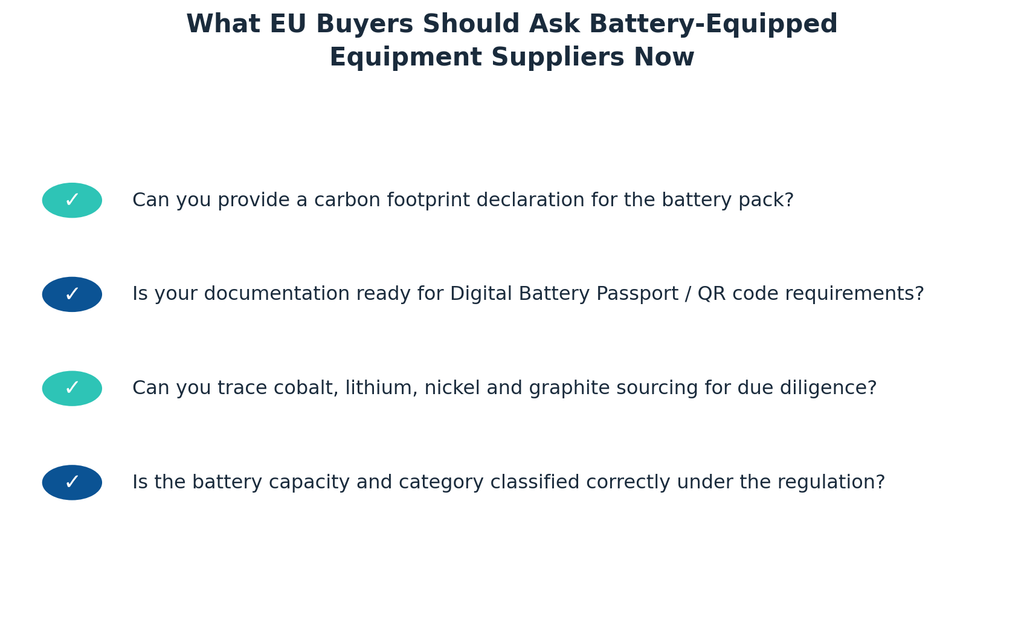
For European buyers evaluating containerized or foldable solar-storage products, this is becoming a legitimate procurement question well ahead of the hard deadlines, not something to raise only once enforcement begins. A supplier who can already produce carbon footprint data, explain their raw material sourcing, and speak to battery passport readiness is derisking a purchase in a way that price and specifications alone don’t capture.
Looking ahead
The EU Battery Regulation follows the same broader pattern seen elsewhere in European energy policy: standards that start with the most visible category, in this case EVs, and steadily widen to cover industrial and stationary storage equipment on a rolling multi-year timeline. With the next major milestone, the Digital Battery Passport, arriving in February 2027 and due diligence obligations following in August of the same year, the window for containerized solar-storage manufacturers to get ahead of these requirements, rather than scramble to meet them, is closing faster than it might appear.
Europe’s Push for Zero-Emission Construction Sites Is Creating a New Market for Site Power
Diesel generators have powered European construction sites for decades, running everything from site lighting and tools to portable offices and EV charging points. That default is now under sustained regulatory pressure, and the direction of travel points toward one clear winner: self-contained power systems that produce zero tailpipe emissions on site, with solar-plus-storage containers among the most practical options available today.
A regulatory tightening that has been building for almost 30 years
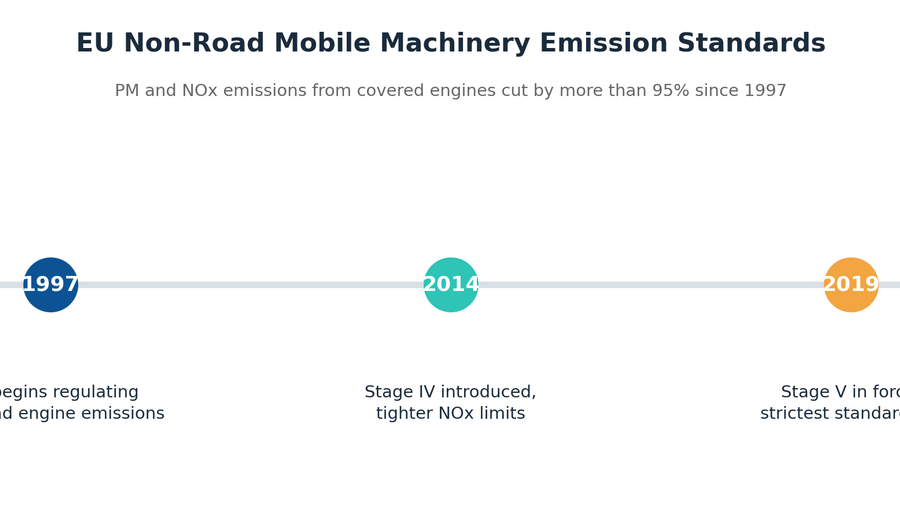
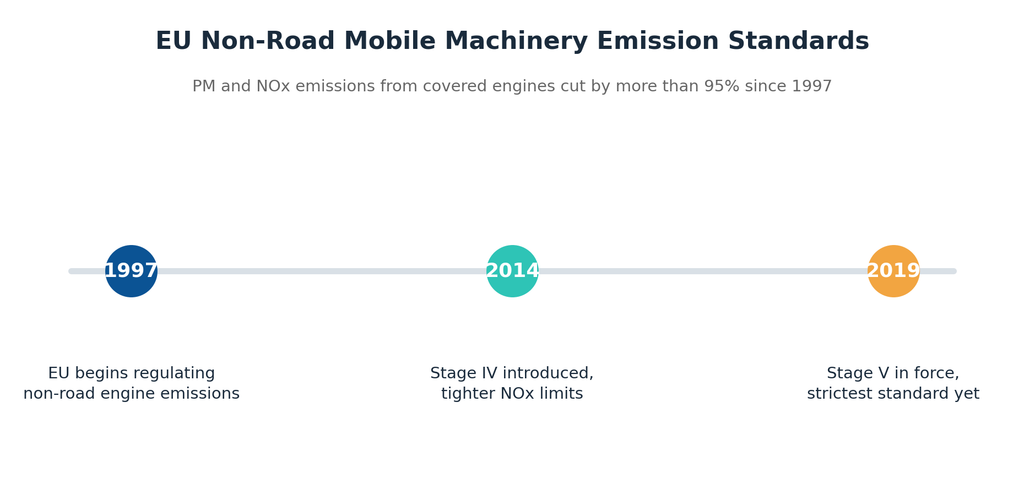
The EU has regulated emissions from non-road mobile machinery, the category that covers generators, excavators, compressors, and similar equipment, since 1997. Each successive stage of the rules has been stricter than the last, and the current Stage V standard, in force since 2019, is the toughest yet. Cumulatively, these rules have cut particulate matter and nitrogen oxide emissions from covered engines by more than 95% since regulation began.
This is not a static rulebook, either. Industry monitoring bodies have flagged that the European Commission is expected to report on a review of the Stage V regulation, based on years of in-service emissions monitoring data, suggesting further tightening is a live possibility rather than a distant hypothetical.
Cities are moving faster than the baseline
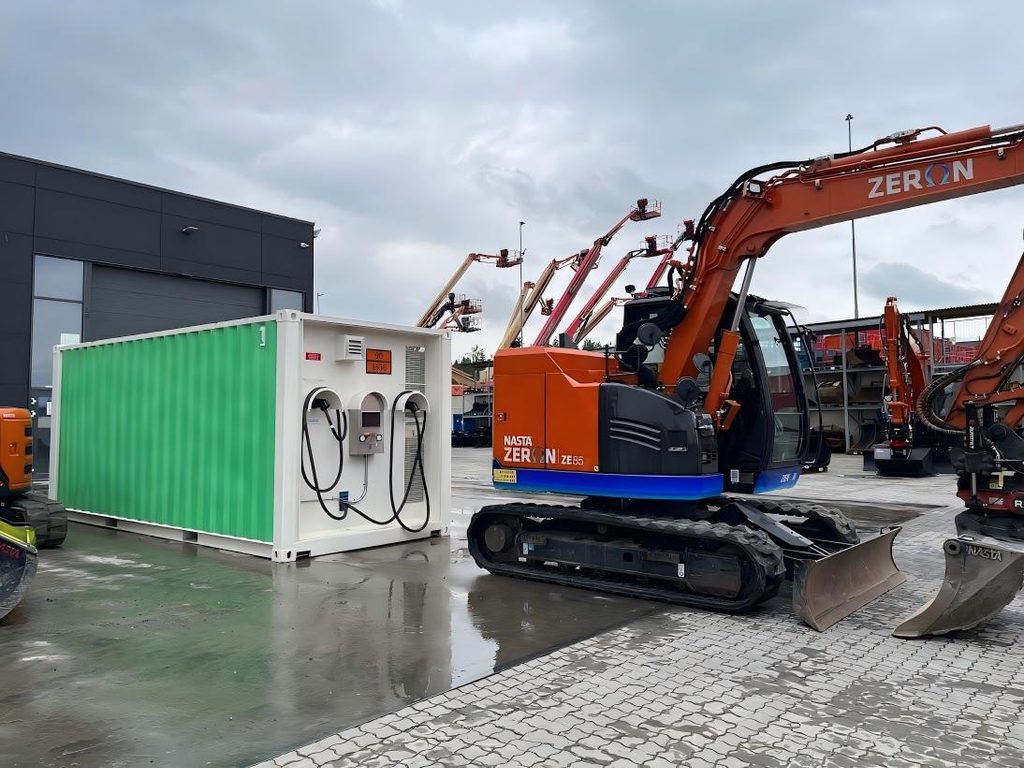
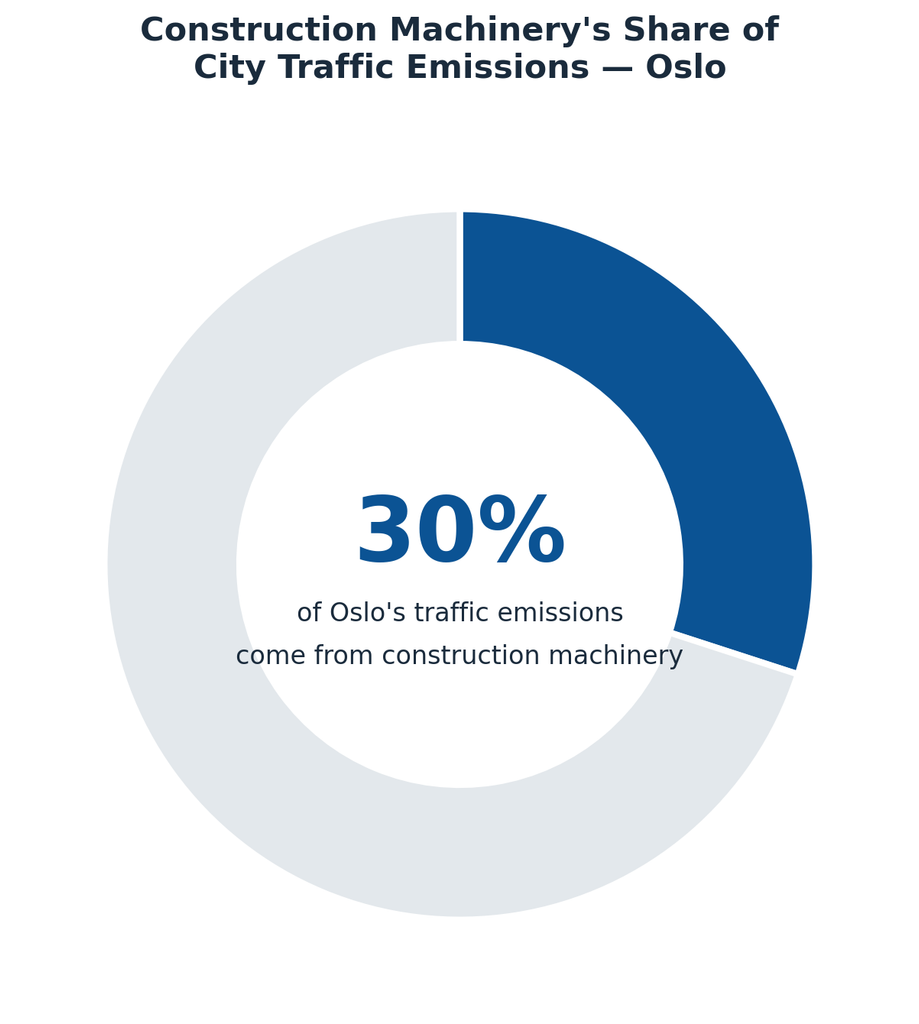
While EU-wide rules set the floor, individual cities are setting a much higher bar. Oslo became home to the world’s first fully emission-free construction site in 2019 and has committed to eliminating fossil fuel use from municipal construction entirely by 2030, as part of a broader target to cut the city’s climate gas emissions by 95%. The scale of the opportunity is significant: construction machinery is estimated to account for roughly 30% of Oslo’s traffic-related emissions, a share large enough that tackling it has become a headline climate strategy, not a side initiative.
Stockholm and Copenhagen have followed similar paths, each folding zero-emission construction targets into their city climate strategies. The pattern across all three is the same: municipal procurement rules increasingly specify fossil-free equipment for public construction projects, which puts direct commercial pressure on contractors bidding for that work.
Why this shifts demand toward solar-plus-storage containers
For a contractor facing a zero-emission tender requirement, the practical question is simple: what replaces the diesel genset without requiring a new grid connection or months of site engineering? A pre-integrated solar-plus-storage container answers that directly, since it ships as one factory-tested unit, produces no tailpipe emissions at all, and can power site lighting, tools, and offices the same way a generator would.
Two design factors matter more as this shift plays out:
- Regulatory durability. A solar-plus-storage system is not exposed to the next round of engine emission limits at all, since it has no combustion engine to regulate. That removes a compliance variable that diesel and even newer low-emission generator sets still carry.
- Transport efficiency. As more of these systems move across borders to reach job sites, the shipping footprint of the unit itself becomes a real cost line. A foldable container design that ships flat and unfolds into full size on site reduces the number of loads needed to mobilize a project, compared with a rigid container shell of the same finished capacity.
Looking ahead
The direction is consistent across every level of policy in this space: EU-wide standards have tightened for almost three decades with a further review pending, and leading cities are moving well ahead of that federal floor with hard 2030 targets. For equipment buyers and rental fleets serving the European construction market, the practical takeaway is that zero-emission site power is shifting from a compliance edge case to a standard tender requirement, and solar-plus-storage containers are one of the few technologies positioned to meet that requirement outright.
Off-Grid Renewable Power Is Growing Fast, and Most of It Isn’t Going to Households
When people picture “off-grid solar,” the first image is usually a rural home or a village mini-grid. But the latest global data tells a broader story: off-grid renewable power is increasingly about keeping remote worksites, farms, telecom towers, and event locations running, not just lighting homes. That shift matters directly for anyone evaluating containerized or foldable solar power systems.
The scale of off-grid growth
According to the International Renewable Energy Agency, global off-grid renewable power capacity reached 11.1 GW by the end of 2024, enough to connect 86 million people to electricity for the first time. Africa accounted for more than three-quarters of that year’s new beneficiaries, reflecting continued momentum in rural electrification across the continent.
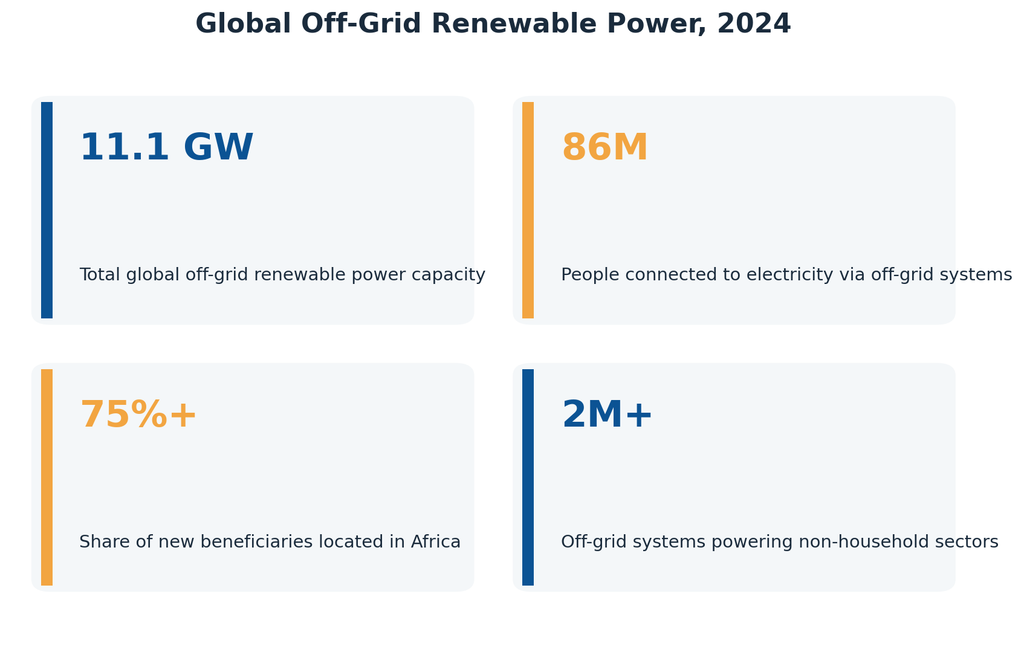
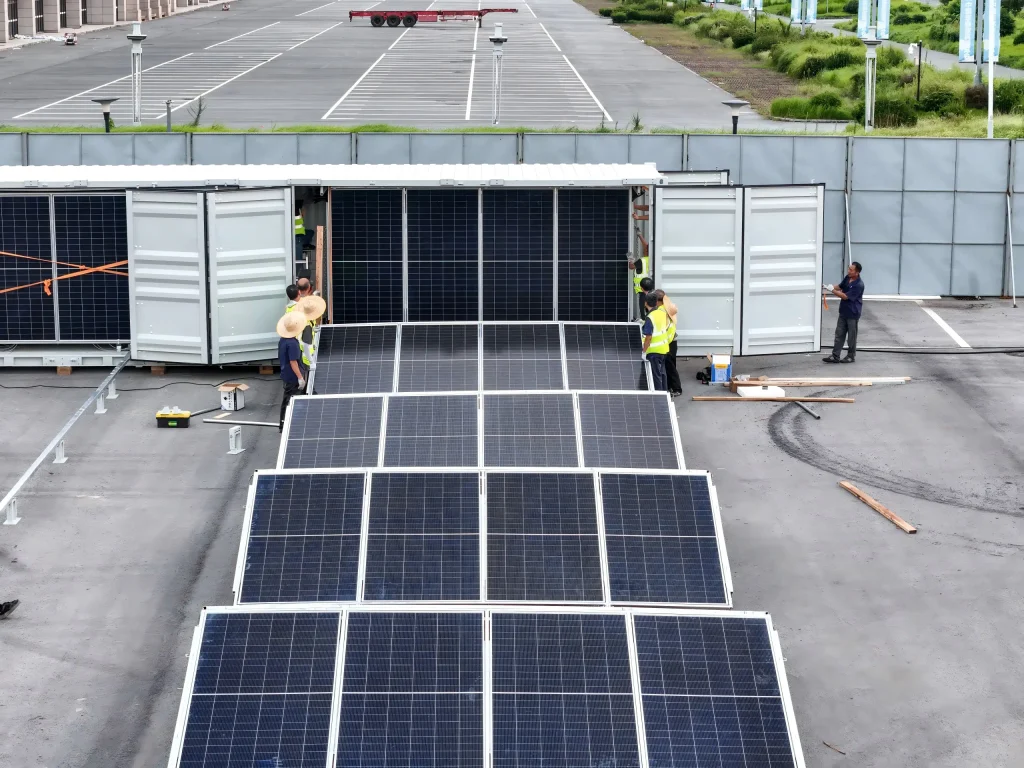
What’s easy to miss in the headline number is the non-household share of that market. Over 2 million off-grid renewable systems worldwide are now delivering power to sectors that have nothing to do with residential lighting: agriculture, healthcare facilities, schools, public lighting, tourism operations, and communications infrastructure. This is exactly the segment that containerized and foldable solar-plus-storage products are built to serve, since these are precisely the site types, remote, temporary, or infrastructure-light, where a pre-integrated power system beats building fixed grid connections.
The growth rate is accelerating, not plateauing
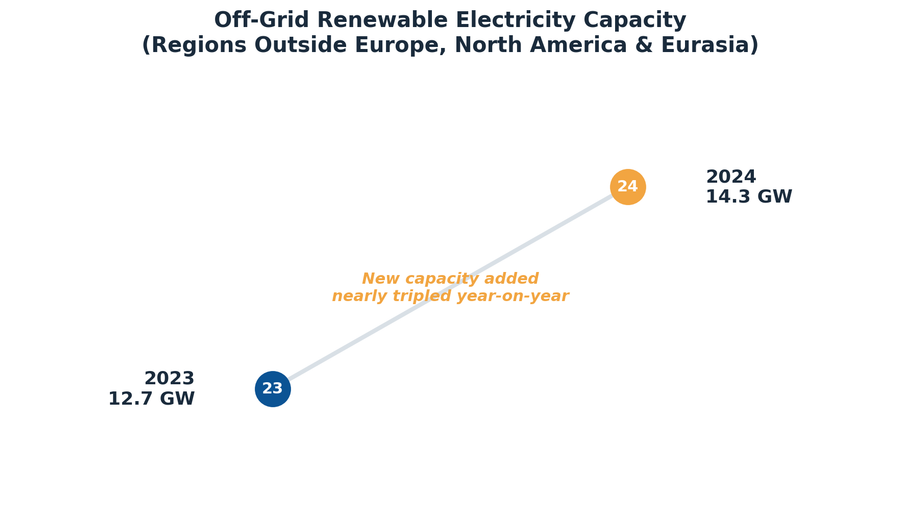
The 2024 snapshot also fits inside a longer growth curve. Separate IRENA capacity statistics, tracking off-grid electricity across regions outside Europe, North America, and Eurasia, show total capacity rising from 12.7 GW in 2023 to 14.3 GW in 2024. More notably, the amount of new capacity added in a single year nearly tripled compared to the prior year’s pace.
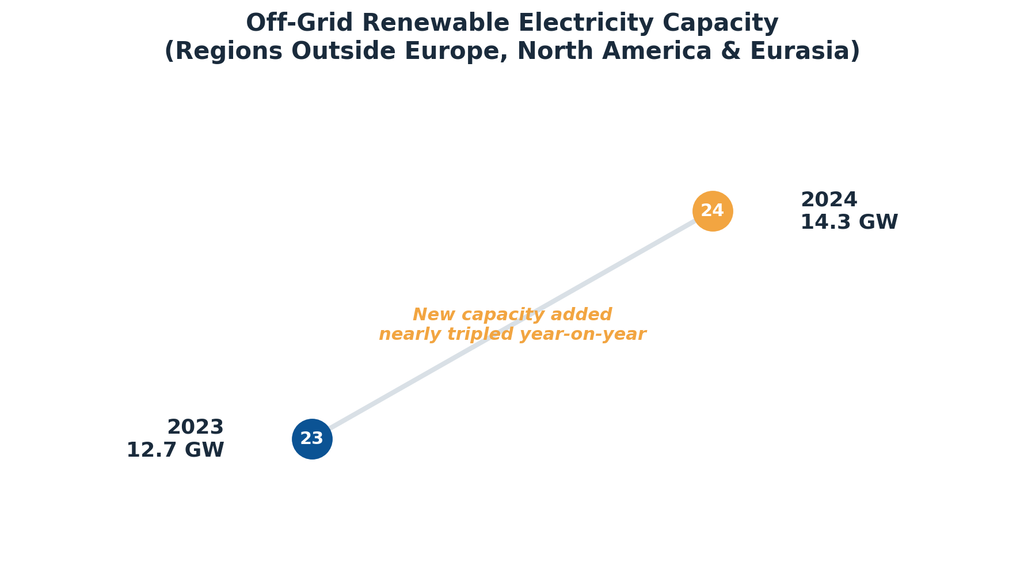
That acceleration lines up with a wider trend across the renewable sector: 2024 saw a record 585 GW of new renewable capacity added worldwide, a 15.1% annual growth rate, the fastest on record. Off-grid deployment is riding the same wave, just applied to sites that will likely never see a conventional grid connection, or that only need power for a defined project window.
What this means outside the traditional “energy access” story
For markets like Europe, the off-grid growth story looks a little different than it does in Sub-Saharan Africa. It is less about first-time electrification and more about:
- Temporary and remote industrial power – construction sites, agricultural operations, and infrastructure projects that need power before permanent grid connections exist, or in locations where one is never planned.
- Grid resilience and backup – sites in areas prone to grid instability or extreme weather, where a self-contained solar-plus-storage unit can operate independently when the main grid is down.
- Mobile and event-driven demand – festivals, exhibitions, film productions, and disaster-response operations that need clean, quiet power for a limited period and then need to relocate the equipment elsewhere.
These use cases share a common requirement: the power system has to arrive ready to run, without months of site engineering. That is the core design premise behind containerized solar products, and it is increasingly why foldable formats are gaining attention specifically, a folding structure that ships flat-packed cuts freight volume and cost compared to a rigid container shell, while still unfolding into the same footprint on site.
The takeaway
The off-grid renewable sector isn’t a niche adjacent to the main grid story anymore, it is one of the faster-growing corners of the broader renewable buildout, and a meaningful share of that growth is commercial and industrial rather than residential. As more governments and private operators treat resilient, deployable power as standard infrastructure rather than a stopgap, containerized and foldable solar-plus-storage systems are positioned to move from a specialty tool into a mainstream category of power equipment.
 English
 Croatian
 Czech
Czech Danish
 Dutch
Dutch Estonian
 Finnish
 French
 German
 Greek
Greek Hungarian
 Irish
Irish Italian
 Japanese
 Korean
 Lithuanian
 Luxembourgish
 Norwegian
 Polish
 Portuguese
 Romanian
 Slovak
 Slovenian
 Spanish
 Swedish